






Slip a myHandiQR card into your wallet, and everyone around you knows what to do during a seizure
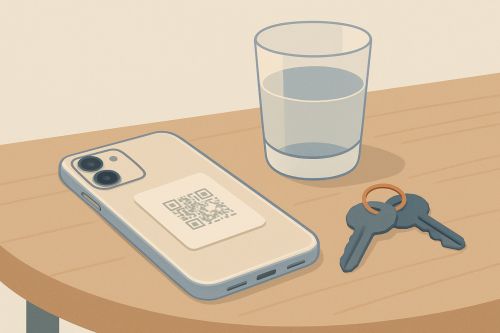
A laminated card in the wallet, a QR stuck on the back of the phone. In the event of a seizure, the first responder or passerby who scans it gains access to your protocol: what to do, contraindications, emergency contact.
This case involves an adult with epilepsy (tonic-clonic seizures, absence seizures, silent seizures) who wants to keep a protocol accessible without imposing it in daily interactions.
The moment it happens
Friday evening, on a cafe terrace. You are chatting with a colleague. Without warning, you lose the thread, your gaze freezes, the glass falls. An absence seizure. Fifty seconds later, you come back, dazed. Around you, no one knows what just happened.
The colleague panics, takes out your wallet (your instruction, written on the card). They scan the QR on the back of a laminated card. They read: "Likely seizure. Sit me down somewhere calm, do not give me anything to drink for 10 minutes, do not panic. If the seizure lasts more than 5 minutes, call emergency services. Contact: partner, [phone]."
They sit you down. They call your partner. You come back to yourself. No one called the fire brigade for nothing. The evening resumes, calmer.
- You write it
- The QR is in place
- The reader scans
- Understood, without explaining again
Where to place the QR for this case
The idea: that the QR be where a third party will look in case of doubt, and that it be duplicated across several supports.
- Laminated bank card-sized card in the wallet, behind the other cards.
- QR sticker stuck on the back of the smartphone (standard A4 sheet of stickers).
- Medical card-holder bracelet with visible QR.
- Lanyard pouch if you work in an environment with badge wearing.
The rule: a well-meaning stranger should find the QR in under 30 seconds, without having to search.
Pre-written text templates
Three outlines to give first responders or bystanders the essentials, without overload.
For the "About" section
"I have epilepsy. My seizures can take the form of absences (a fixed stare, lasting several seconds), or more visible seizures. My treatment is monitored by a neurologist; the full medical file is available in case of hospitalisation."
For the "How to help" section
"What to do: help me sit down somewhere quiet, move dangerous objects away, do not put anything in my mouth, wait for the seizure to end. If the seizure lasts more than 5 minutes or repeats, call emergency services. Emergency contact: [name], [phone]."
For the "What to avoid" section
"What to avoid: giving me anything to drink during or just after the seizure, physically restraining me, moving me abruptly, sitting me up if I have just had an unseen fall, calling out to me loudly. Calm and time are the best allies."
Conditions covered
Epilepsy is central here. When it comes with a cognitive condition or chronic fatigue, the protocol can include those dimensions.
Similar cases
Three other emergency situations where a wallet card with a QR code saves precious time.
The teacher understands the atypical social behaviours and can pass the useful information on to the teaching team.
View the case High-school student with ADHD, age 17 Reader: Tutor teacher, school liaisonThe tutor understands the organisation difficulties and can suggest concrete accommodations for exams.
View the case Adult with ADHD, age 34 Reader: New colleague, managerThe person chooses when and to whom they explain how they work, in their own words, without having their lapses misread.
View the case