






Flying with an autistic child: what to prepare ahead of time
Three areas to prepare: the child, the crew who meet them at boarding, the sensory environment of the flight. A run-through covering the weeks before departure right through to the return.
A trip prepared on three levels
Flying with an autistic child calls for preparation on three levels: the child themselves, the crew who meet them at boarding, and the unfamiliar sensory environment of the flight. Most avoidable incidents come down to a detail missed in this preparation. Here is a sequence covering the days before, the trip through the airport and the hours in the air, without turning the journey into a marathon.
Preparing the child in the weeks beforehand
The journey begins in the weeks beforehand. The child needs to be able to picture what is going to happen:
- watch short videos of boarding and flight procedures together
- make a small picture booklet or a sequenced visual schedule of the trip
- rehearse the unusual positions at home: seatbelt, waiting, earplugs
- identify 2 or 3 regulating objects to take along (headphones, comfort toy, fidget)
Visual anticipation prevents surprise, the first trigger of overload.
Preparing the flight crew and the airline
Several airlines offer an invisible disability service to be flagged 48 hours before departure:
- the sunflower lanyard, a discreet sign recognised in many airports
- priority boarding to avoid the crush of the queue
- a seat near an exit or by a window depending on sensitivity
- a short crew briefing at boarding
These requests are made through an online form or by phone to the accessibility service.
Arriving at the airport, managing the wait and the checks
The airport is the most sensory-saturated part of the trip: announcements, crowds, security queue, fluorescent lights. A few levers to get through this zone:
- arrive earlier than usual so as not to add time pressure
- use the assistance service (often free, booked in advance) which handles fast passage through security
- scout out in advance a quiet space or the prayer room found in large airports, often silent
- put on noise-cancelling headphones even before entering the hall
Once in the boarding area, keep the child away from the loudspeakers and limit open questions: prefer short, concrete instructions.

On board, managing the sensory peaks from take-off to landing
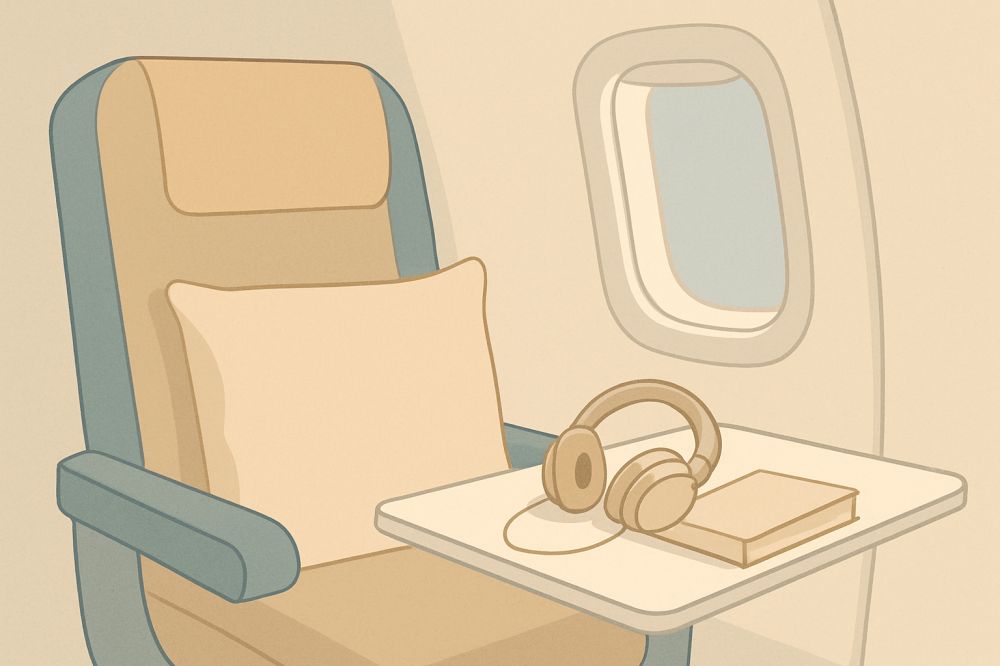
Three moments of the flight concentrate the difficulties: take-off, the long cruise, and landing. For each, micro-adjustments help:
- take-off: chewing gum or a pacifier to relieve the ears, eye contact with a reference adult
- cruise: familiar activity (a book already known, drawing, a non-screen game that does not overload)
- landing: a drink to sip slowly, attention drawn to the window
More broadly, briefing the crew before the flight avoids having to explain in a rush. For a crew who only see the child once, or for a quick handover at a stopover, some parents slip into the seat pocket a myHandiQR profile on a credit-card-sized card, scannable in a few seconds.
The return and anticipating the next trip
The return is often underestimated: a tired child, tired parents, a different crew. A few useful principles:
- make the same requests to the airline 48 hours before the return flight
- plan fewer activities on the day of the return and the day after
- note down straight away what worked and what did not, for the next trip
Each trip becomes simpler if you build on the previous one.
Key takeaways
- Prepare the child 2 to 3 weeks before with a visual schedule and short video sequences.
- Flag the need 48 hours before to the airline's accessibility service to activate assistance and priority boarding.
- The airport is more saturated than the plane: noise-cancelling headphones from the entrance, a quiet space scouted in advance.
- Three critical moments in flight: take-off, long cruise, landing. Each has its simple response.
- Repeat the same briefing on the return and capture straight away what worked.
Living with a disability: the context set, the conversation freed up.
You write the essentials once. The teacher, the AESH, the manager, the first responder scan and understand. You stop repeating yourself.
Recommended
-

Invisible disability: understanding and being understood
A disability that can't be seen still has to keep justifying itself. Here is what that phrase actually covers, who it concerns, and how to be better understood without explaining e…
Read the article -
Hairdresser, dentist, doctor: preparing an appointment when hypersensitivity comes into play
Three appointments where imposed contact, noise and waiting become overwhelming within minutes. How to prepare for them ahead of time, both for the family and for the practitioner.
Read the article