






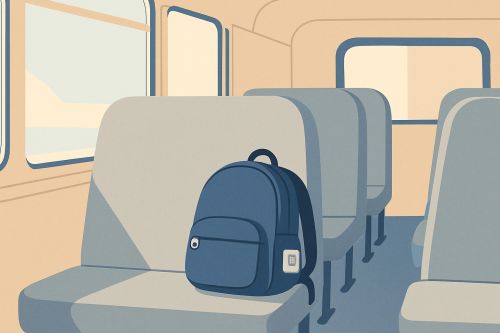
What to do at the first signs of a meltdown on the school bus, before the next stop?
A card slipped into the backpack of a child with severe autism, and the school bus driver spots the first signs of a meltdown before it takes over the whole vehicle. They know which gesture to avoid and which one helps calm things down, without a parent having to come aboard to explain it every morning.
This case involves a 10 year old child with severe autism, who rides the school bus alone every day. You want the driver, sometimes replaced from one week to the next, to have an immediate reference point rather than discovering the situation in the middle of a meltdown.
The moment, as it happened
The steady pounding on the bus window starts even before the third stop on the route. Lucas, 10, hits the window with the flat of his hand, harder and harder, while the driver, filling in on this route since Monday, glances in the rear-view mirror unsure whether to stop the vehicle or keep driving.
He then remembers the card slipped into the front pocket of Lucas's backpack, pointed out by the aide when he got on. He reads it at the next stop while the children get off: the pounding does not signal danger but sensory overload, and turning off the bus radio, rather than raising his voice, usually helps the tension go down.
He turns off the radio without a word. The pounding slows, then stops before the next stop. No call was made to the school to report an incident, no other child on the route was forced into a different seat, and the driver carries on his round without having had to improvise a response under pressure.
- You write it
- The QR is in place
- The reader scans
- Understood, without explaining again
Where to place the QR code for this case
A child on the school bus sometimes has a different driver from one week to the next, which makes word-of-mouth handover unreliable. The reference point must stay with the child, accessible as soon as they get on the vehicle, regardless of who is driving that day.
- Card in the front pocket of the backpack, easy for the aide or driver to spot as soon as the child gets on.
- Label on the bag handle, printed from a standard A4 sheet of labels, visible without having to open the bag.
- Stamp inside the route logbook kept by the driver, if the school provides one for each child transported.
- Link shared with the school transport company, kept in the child's file, accessible to any substitute driver assigned to the route.
The rule to keep in mind: the information must be accessible as soon as the child gets on the bus, without depending on the regular driver or a last-minute phone call.
Ready-to-use text templates
Three templates to adjust to your child's situation. They cover what a driver reads first: who the child is, which gesture helps during the ride, and what risks making a meltdown worse. Starting points, not sentences to copy word for word.
For the "About me" section
"My name is [first name], I am [age] years old. I have severe autism: noises and sudden jolts during the ride can become hard to bear. Hitting the window or rocking does not signal danger, it's a sign that I need the noise level around me turned down."
For the "How to help" section
"You can: turn down or turn off the radio if signs of tension increase, keep a calm and low tone of voice, avoid stopping abruptly without warning, and leave me in my seat rather than making me change seats during a meltdown."
For the "What to avoid" section
"To avoid: raising your voice to be heard, holding my hands or arms still, honking or braking sharply without necessity, or improvising an unplanned stop without informing the school."
Conditions related to this case
This case involves autism, here at an intensity that makes certain noisy or unpredictable environments hard to bear. A gesture such as hitting a window or rocking often signals sensory overload rather than behaviour to correct. The linked page details how this works and the supports that help during journeys supervised by an adult outside the family.
Similar cases
Other journeys supervised by an adult outside the family, school transport, class outing, or club activity, where a card accessible as soon as the child is taken in charge prevents a sign of sensory overload from being mistaken for behaviour to be punished.
The teacher understands, right when marking, why the handwriting is difficult, without the child having to ask out loud for leniency.
View the case Autistic child (ASD level 1), age 7 Reader: Substitute teacherThe substitute can access the sensory triggers and routines without any written handover, and without singling the child out in front of the…
View the case Child with ADHD, age 11 Reader: AESHThe support assistant has the right strategies from day one, with no trial and error and no extra meeting.
View the case